

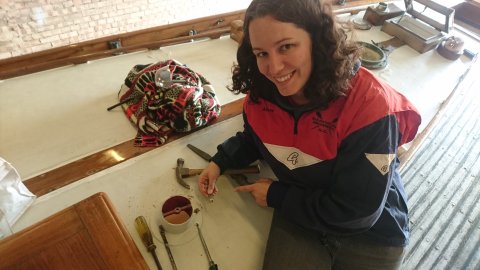
It is a scary prospect to start removing fittings which have never been off in almost 70 years but a start has to be made. First skills practised were clearing paint from screw heads.
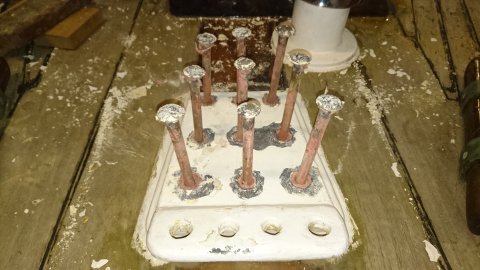
The under deck bolts were generally in good condition but this was not the case within the wood. Significant dezincification had occurred around the fitting-deck boundary so that there was almost no strength in the fittings.
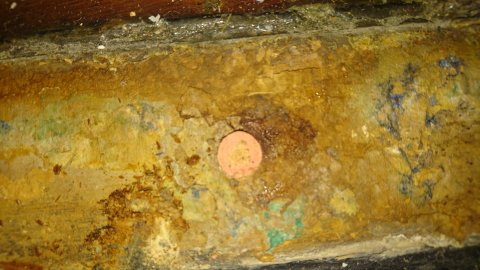
The bolt in the photo was a tiny area of shiny bronze in the centre but otherwise it is just copper-rich soft particles. This was to be the theme through most deck fittings with bronze fasteners which had never been removed since build. Having said that the cleats took a lot of work with a crowbar and lever to get them free.
It would appear that many of the fastenings may have had a high zinc content (>15%) and the fresh water trapped between the deck and the fitting caused plug-type dezincification.
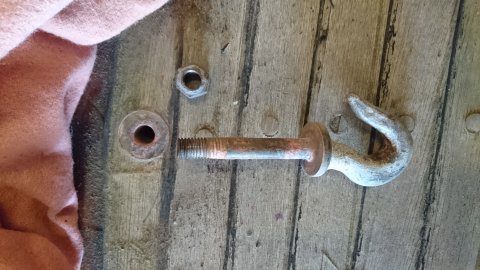
The iron fittings have fared better with minor outer surface wastage. The runner hooks and mainsheet eyes can be retained for refitting.
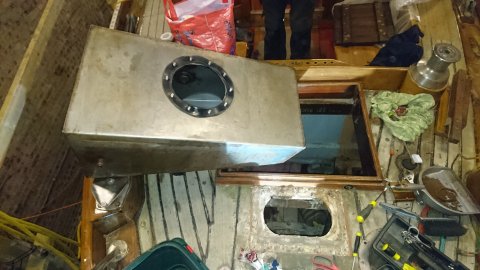
There was a bit of a puzzle removing the cockpit fuel tank, it was obvious that the inboard panel was designed to be removed but it had not been so for many decades. It turned out it was a simple and clever retaining lugs and I am unsure if there was actually any mechanical fasteners holding the panel in place. There were various bearers and spacers holding the tank in place.
The cockpit tank was planned to be removed but we ended up removing the aft starboard tank through the lazarette. The deck fitting would not unscrew from the threaded pipe from the tank and the threaded pipe was welded into the tank top. Being in the deck and with diesel residue I made the surprisingly sensible decision not to apply heat and so cut the pipe, we will have to get a new filler pipe attached and refit the tank.
The bolts for the fore stay plate were in good visible condition but due to the importance we will replace them also when refitting.
Much of the deck fittings required a hammer and punch style removal but the coachroof fittings required a more delicate touch. Alison learnt how to remove the plugs from the handrails. Although we rely on these rails to hold onto and tie the dingy on to etc, once they are removed they are very long and fragile as well as being difficult to replace so great care was taken in removing them from the boat and taking them home.
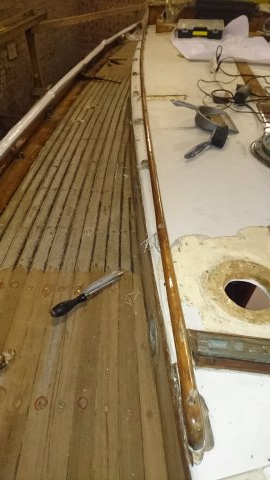
The fore boom track seems to have been reattached at some time as the screws in every 2nd hole came out no bother while every other one had broken heads.
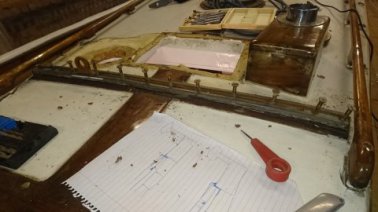
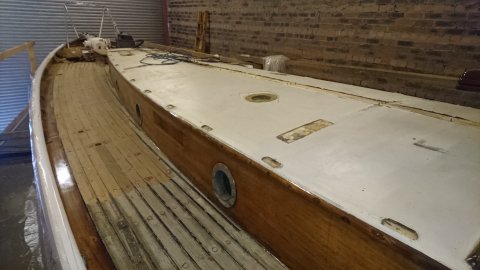
Eventually everything was cleared from the deck and coach roof, this took about 10 days of work. The photo below also shows the boatbuilder’s first exploratory router skim.
 Isla Rose